Accessibilità digitale e conformità normativa

L’accessibilità digitale è un elemento cruciale per garantire che prodotti e servizi online siano fruibili da tutti, inclusi utenti con disabilità permanenti o temporanee. Il nostro approccio all'accessibilità non solo garantisce il rispetto delle normative, ma promuove anche l’inclusione e l’ampliamento della base utenti, migliorando l’esperienza complessiva.

To truly shine, you've got to radiate brilliance. Unleash your imaginative flair with Steezy.
L'accessibilità come
opportunità di crescita
per il tuo brand.

The European Accessibility Act — Directive (EU) 2019/882 — has applied across the EU since 28 June 2025. It is not guidance. It is law, transposed into the national legislation of every EU member state, with designated authorities empowered to monitor compliance, investigate complaints and impose penalties.

The Act sets accessibility requirements for products and services placed on the EU market. In practice, for most businesses that means digital services: websites, mobile apps, e-commerce, online banking, ticketing, e-books and customer-facing platforms must be perceivable, operable, understandable and robust for people with disabilities. The recognised technical benchmark for meeting these requirements is the WCAG 2.2 AA standard.

Who must comply

Who must comply

The EAA applies to economic operators — manufacturers, importers, distributors and service providers — offering in-scope products and services to consumers in the EU. Sectors most directly affected include:

  • E-commerce and online retail
  • Banking, payments and financial services
  • Transport and ticketing (air, rail, bus, ferry booking and information)
  • Telecommunications and electronic communications
  • Audiovisual media and streaming services
  • E-books and digital publishing
  • Self-service terminals (ATMs, ticketing machines, check-in kiosks)

Microenterprises providing services — fewer than 10 staff and annual turnover or balance sheet not exceeding €2 million — are exempt from the services obligations, though the exemption is narrower for products. If you are unsure whether you are in scope, an audit is the fastest way to find out.

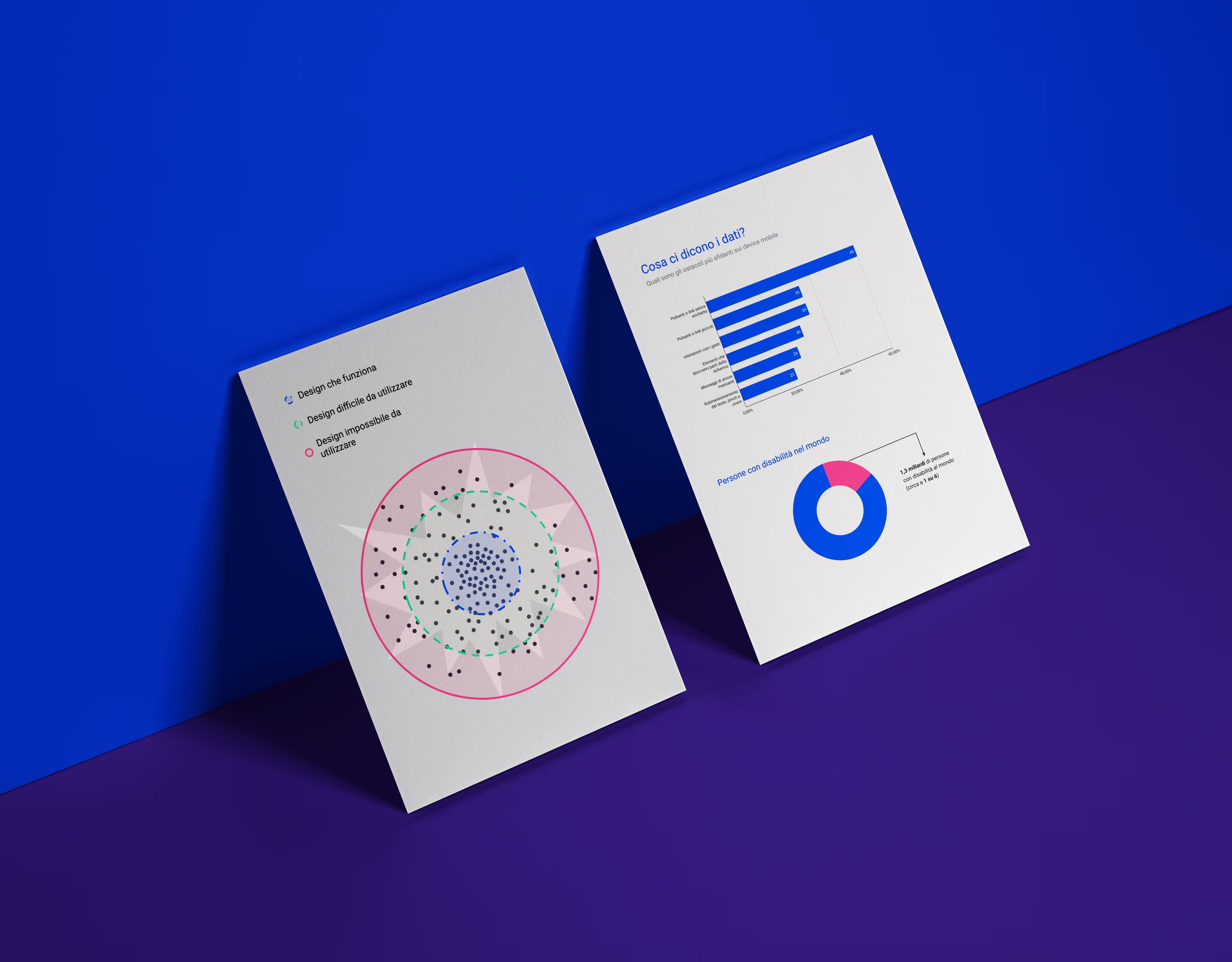
Body — the exposure Non-conformance is not a theoretical risk. Enforcement bodies can require corrective action, suspend a non-compliant service from the market, and apply penalties set by each member state. Beyond the legal exposure, an inaccessible site quietly turns away customers: roughly one in four adults in Europe lives with some form of disability, and inaccessible checkout flows, forms and navigation cost real revenue every day.

WHAT’S INCLUDED

What a Conflux accessibility audit delivers

Every audit produces four deliverables built to serve two audiences at once — the engineers who fix the issues and the decision-makers who carry the legal and commercial risk.

Deliverable 1 — WCAG 2.2 AA conformance report A formal, criterion-by-criterion assessment of your site or app against the Web Content Accessibility Guidelines 2.2 at Level AA. For each success criterion we record a clear conformance status — pass, fail or not applicable — with the evidence behind it. This is the document that demonstrates where you stand against the recognised EAA benchmark.

Deliverable 2 — Prioritised issue list Every defect we find, ranked by severity and user impact — not an undifferentiated dump from an automated scanner. Each issue is tied to the specific WCAG criterion it breaches, the pages or components affected, and a plain-language explanation of who it blocks and why.

Deliverable 3 — Remediation roadmap A sequenced plan that turns the issue list into work your team can schedule: quick wins first, structural fixes grouped sensibly, and effort indicated for each. Built so a product owner can plan a sprint and a developer can start on Monday.

Deliverable 4 — Legal-readiness statement A clear summary of your current conformance position, written for a non-technical audience, suitable as the basis for the accessibility statement the EAA expects you to publish and for conversations with legal, compliance and leadership.

La nostra storia di successo

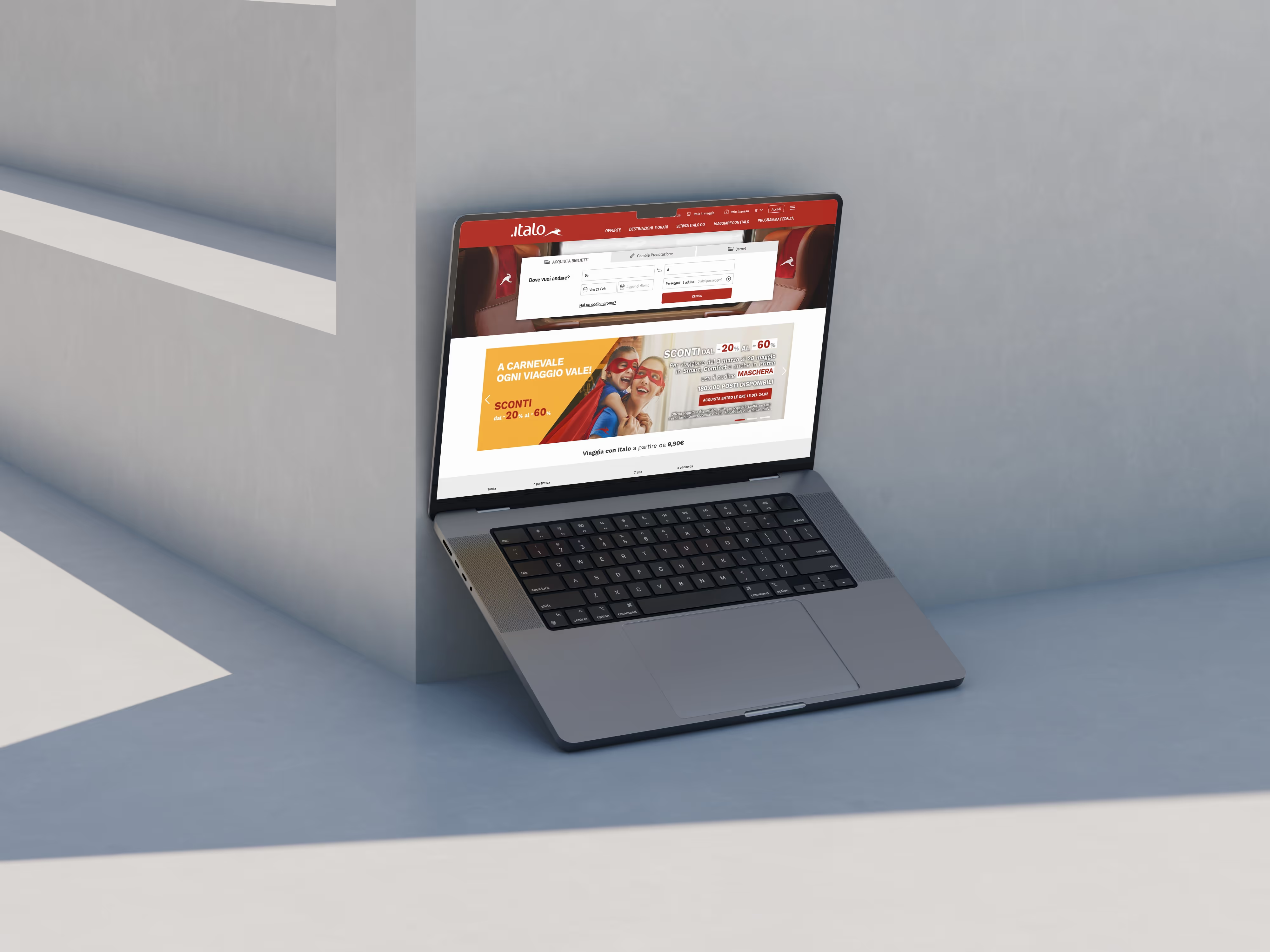
Case study Conflux per Italo - UX design booking experience
Case Study
Italo
Conflux per Chiesi
Lorem ipsum dolor sit amet, consectetur adipiscing elit. Curabitur faucibus, mi sed vehicula ornare, lectus neque commodo massa, eget luctus magna risus nec arcu.
Guarda il case study
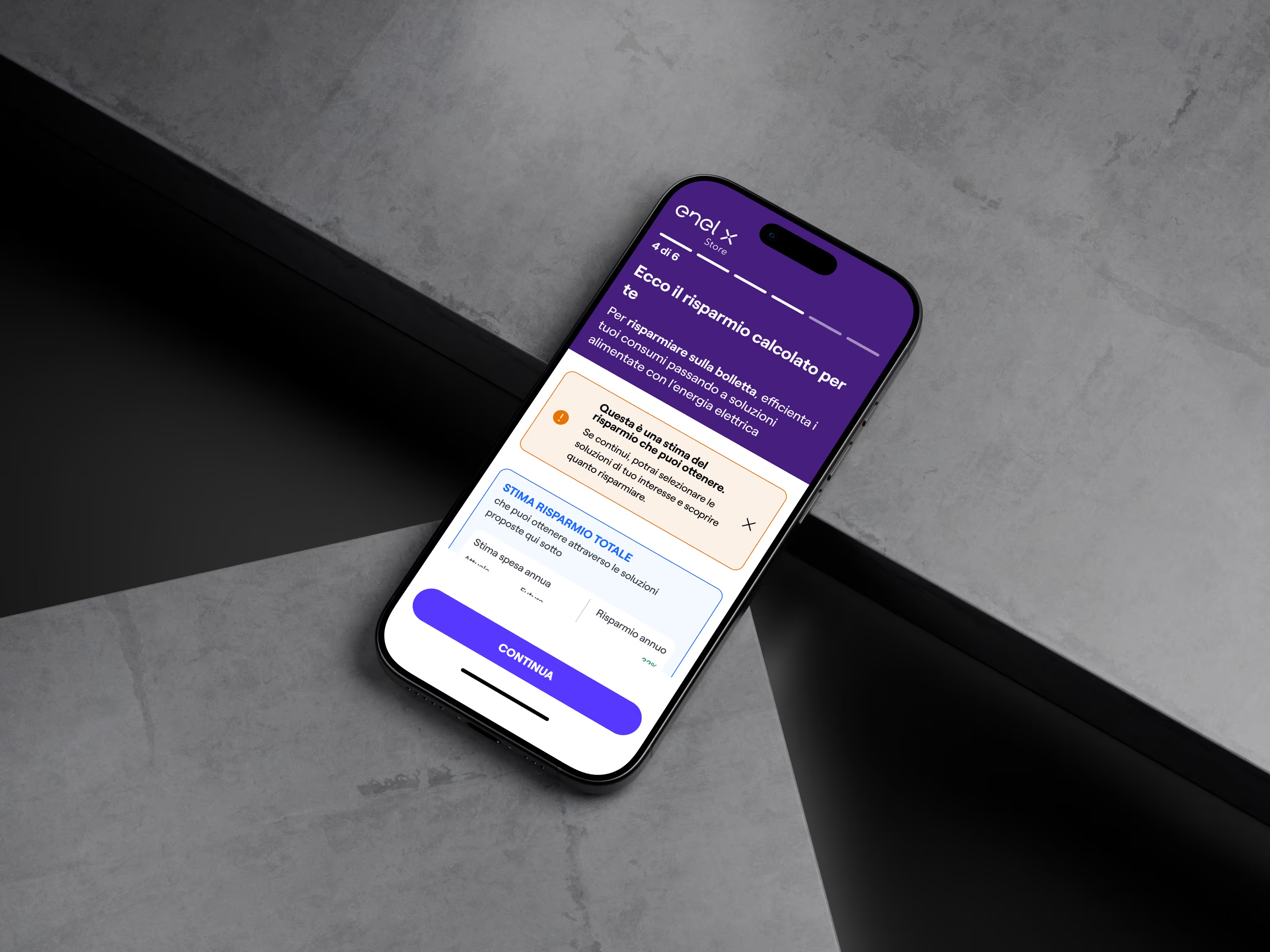
Case study Conflux per Enel Lumiè - simulatore energetico UX
Case Study
Enel
Conflux per Biogen
Lorem ipsum dolor sit amet, consectetur adipiscing elit. Curabitur faucibus, mi sed vehicula ornare, lectus neque commodo massa, eget luctus magna risus nec arcu.
Guarda il case study

Automated testing finds the obvious. We find what it misses

Automated accessibility scanners catch only a fraction of WCAG failures — typically around a third. The rest — keyboard traps, illogical focus order, unclear link purpose, missing context, content that breaks under magnification, screen-reader announcements that make no sense — can only be found by a human testing the way disabled people actually use the web. Conflux combines both.

01.

Automated baseline

We run industry-standard tooling across your site to map the machine-detectable issues at scale and establish coverage quickly.

02.

Manual testing with real assistive technology

Our specialists work through your key journeys using genuine assistive technology — screen readers, keyboard-only navigation, magnification and reduced-motion settings — replicating how people with visual, motor, cognitive and auditory impairments experience your product. This is where the failures that matter most are found.

03.

Agentic tooling for coverage and consistency

We use our own agentic-design tooling to extend reach across large sites — systematically traversing templates, states and components — so coverage is broad and findings are consistent, while expert human judgement decides what each finding means and how to prioritise it.

The result is an audit grounded in academic rigour and real-world use — not a one-click score, but an honest picture of how your product performs for every user.

Automated accessibility scanners catch only a fraction of WCAG failures — typically around a third. The rest — keyboard traps, illogical focus order, unclear link purpose, missing context, content that breaks under magnification, screen-reader announcements that make no sense — can only be found by a human testing the way disabled people actually use the web. Conflux combines both.

01.

Automated baseline

We run industry-standard tooling across your site to map the machine-detectable issues at scale and establish coverage quickly.

02.

Manual testing with real assistive technology

Our specialists work through your key journeys using genuine assistive technology — screen readers, keyboard-only navigation, magnification and reduced-motion settings — replicating how people with visual, motor, cognitive and auditory impairments experience your product. This is where the failures that matter most are found.

03.

Agentic tooling for coverage and consistency

We use our own agentic-design tooling to extend reach across large sites — systematically traversing templates, states and components — so coverage is broad and findings are consistent, while expert human judgement decides what each finding means and how to prioritise it.

What you get from an accessibility audit

Compliance is the trigger. The return is wider than that.

Demonstrable EAA & WCAG compliance A documented conformance position against WCAG 2.2 AA — the evidence you need to show regulators, partners and procurement teams that you take the European Accessibility Act seriously.

Reduced legal and reputational risk A clear remediation path closes the gap between where you are and where the law expects you to be, before a complaint or enforcement action forces the issue on someone else’s timeline.

A better experience for everyone Accessible design is good design. Clearer navigation, readable content, robust forms and keyboard support improve usability for all users — and tend to strengthen SEO and Core Web Vitals as a by-product.

A larger addressable market Around 100 million people in the EU live with a disability. An accessible product is one they can actually buy from — turning a compliance cost into reachable demand.

Why Conflux

Conflux is a digital experience studio built on two foundations: academic rigour and agentic design. We don’t treat accessibility as a checkbox bolted onto delivery — it is a discipline we practise as part of our established digital accessibility service.

Academic rigour
means our audits are methodical and defensible: tested against the published WCAG 2.2 AA success criteria, evidenced criterion by criterion, and explained in language that holds up in front of both your engineers and your lawyers.
Agentic design
means we build and use intelligent tooling to extend the depth and consistency of our testing across large, complex sites — coverage that manual review alone struggles to reach — while expert judgement stays in control of interpretation and priority.

The combination is the point: tooling for reach, human expertise for meaning. That is how Conflux delivers an audit you can act on with confidence.