The best books on user experience



There are foundational texts for anyone who wants to develop a career in user experience (UX) design. Here are five books on user experience that you should not miss.
When we talk about user experience design we tend to think of a set of disciplines that study the relationship between people and the product, with a particular focus on their needs and necessities, in relation to the achievement of certain goals. A student of user experience aims to give a person the best possible experience at the moment they come into contact with a digital product.
User experience is a multidisciplinary subject that involves psychology, technical skills tied to the world of design and of programming languages, and therefore the training of this kind of professional is both cross-cutting and specific.
Passion, dedication and a great deal of experience in the field can make the difference: a good user experience designer or user interface (UI) designer cannot do without the best texts on user experience design and the disciplines connected to it.
As a popular saying has it, “Knowledge is power”, and there are books that you really cannot have failed to read if in your work you want to deal with web and mobile usability, user experience design, websites or user research.
So which are the best books for learning and going deeper into user experience and user interface design?
This is the moment to propose a list of books that a user experience or user interface designer, or a user experience researcher, cannot ignore if they want to continue to grow professionally in the making of successful websites.
The Design of Everyday Things — Donald Norman

Don Norman is commonly considered the point of reference and one of the founding members of modern user experience design. In this book the references are to everyday objects, not to digital products: the main theme of the book explores the relationship between a person and the design of an object. (The well-known Italian edition is titled La caffettiera del masochista.)
Norman presents the concept of poor design as the main explanation for the usability problems of any object: even when it seems to us that something does not work because of a person’s limited ability to use it, we are in fact looking at a limited capacity of design on the designer’s part.
This book is a fundamental starting point for anyone who wants to design anything, digital or otherwise, and it is considered one of the best books on user experience design.
Buy the book The Design of Everyday Things — Donald Norman
The Humane Interface — Jef Raskin
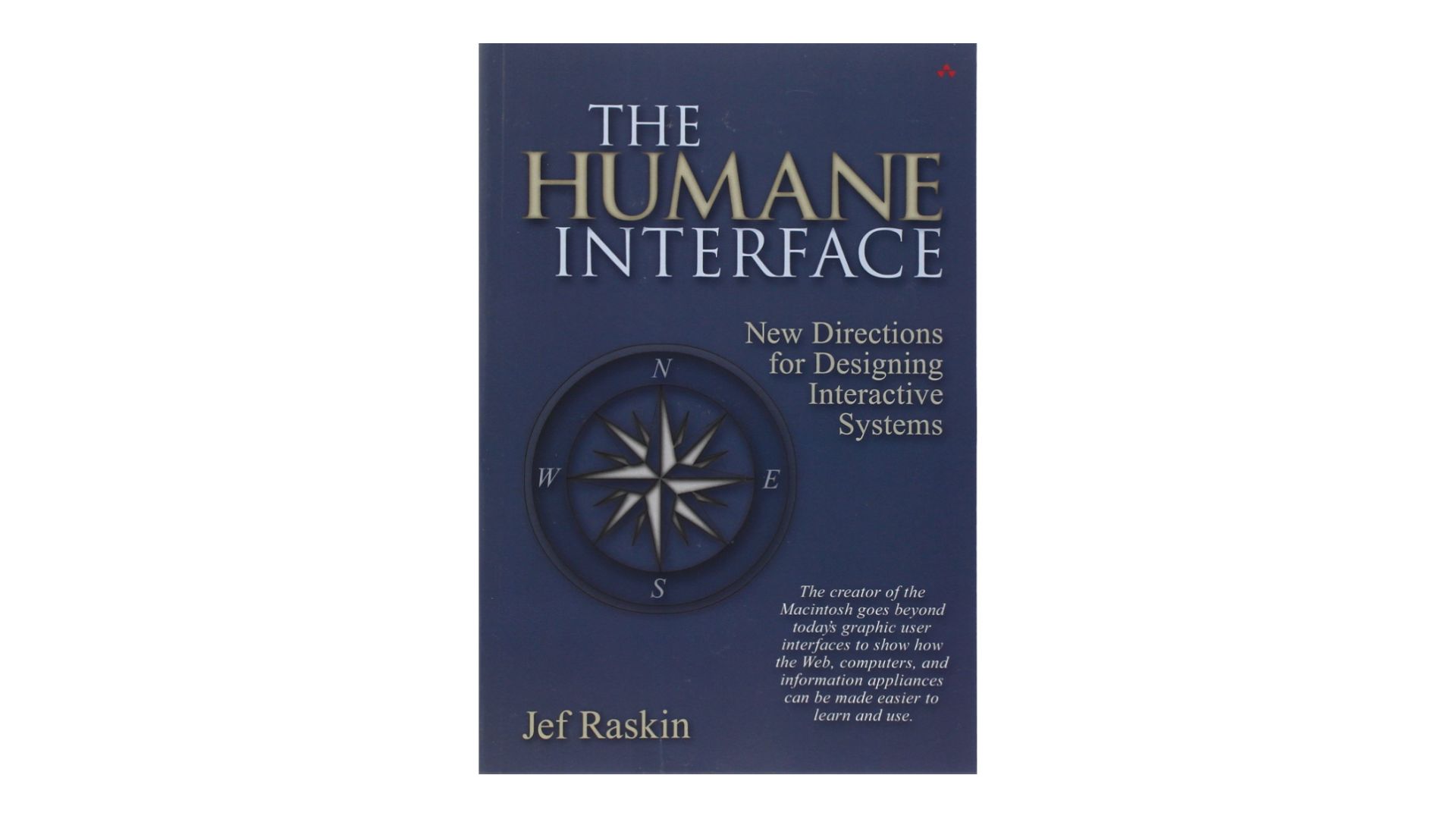
Jef Raskin’s book, The Humane Interface, starts by outlining the paradox of technology. As Norman already suggested in the previous book, technology is born to simplify people’s lives, but it has ended up developing so much that it has increased complexity through new functions of greater or lesser usefulness.
The answer to this mystification of technology is the central point of Raskin’s reflection: the concept of a humane interface.

“An interface is humane if it is responsive to human needs and considerate of human frailties.”
(Jef Raskin, The Humane Interface, p. 7)
Raskin argued that the human being is a thinking but fallible creature; the task of a good interface then lay precisely in its ability to take into account the abilities and the frailties of the human mind. From this comes the elaboration of some basic laws of humane interfaces:
- A computer shall not harm your work or allow your work to come to harm through inaction.
- A computer shall not waste your time or require you to do more work than is strictly necessary.
Finally, it is important to mention the concept of the locus of attention: for Raskin it is difficult for two objects to be in our locus of attention at the same time. That is why, in complex interfaces, there is a risk of shifting the locus of attention from the primary goal, for which the tool is being used, to the interface itself, violating the second of the laws cited above.
Buy the book The Humane Interface — Jef Raskin
Computers as Theatre — Brenda Laurel
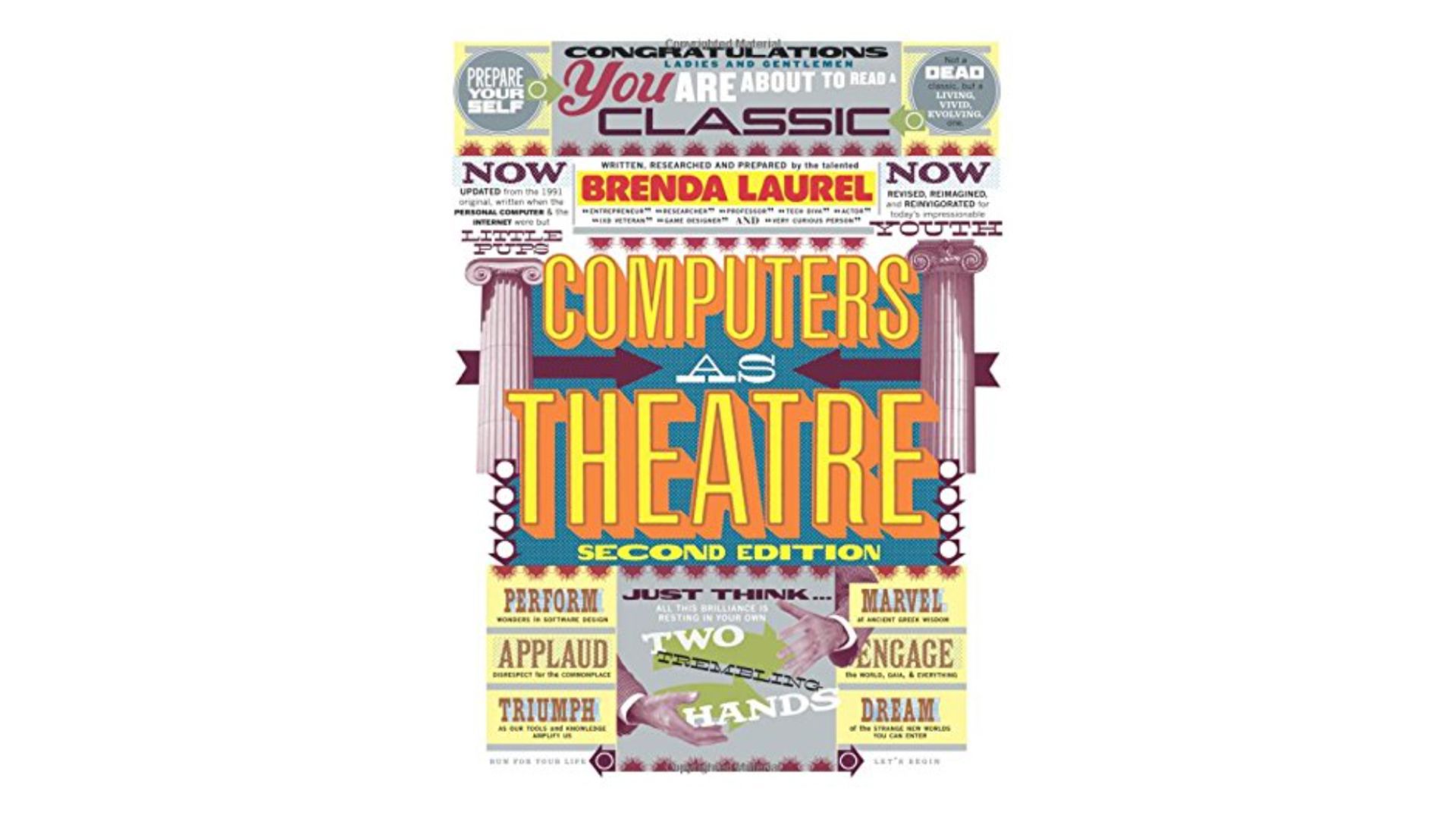
This text brings together the author’s whole background: she completed a doctorate in theatre at Ohio State University and has taken on several roles in the development of technologies and video games. The book “Computers as Theatre” is exactly the result of the combination and cross-fertilisation of these experiences and, for this reason, it offers very innovative starting points.
The text speaks for the most part of user experience tied to the world of theatre and to the design of the interface (user interface design), insisting on the concept of a person who acquires experiences rather than a product. In support of this thesis, theatre is the most fitting example, with its dynamism and its ability to involve the people who watch.
At the same time there are passages in the book in which the differences between the work of development of engineers and that of artists are highlighted: while engineering minds are indispensable in the creation of the technology, it is very often artists who imagine and create the new digital product that becomes widely adopted.
“This book will challenge you to think new thoughts and to adopt new approaches. The subject is going beyond what has been possible so far. To think of human-computer activity as a play being enacted is to take a large view, an overview, and to highlight the thematic aspects of our everyday activities and needs.” Donald A. Norman.
Buy the book Computers as Theatre — Brenda Laurel
The Paradox of Choice — Barry Schwartz

The American psychologist and writer Barry Schwartz develops in his book the theory of the paradox of choice: this highlights how, in the modern world, we find ourselves with more and more choices available in every sector.
“Learning to choose is hard. Learning to choose well is harder. And learning to choose well in a world of unlimited possibilities is harder still, perhaps too hard.”
Barry Schwartz
The paradox of choice establishes that, while we might believe that being able to choose among more options makes the choice easier and therefore increases the consumer’s satisfaction, having an abundance of options in fact requires a greater effort to take a decision and can leave us dissatisfied with our choice.
The concept, tied to the world of user experience design, translates into thinking of a customer irritated by the choices at their disposal, and therefore not very happy.
With this in mind, a designer is called to optimise the information architecture of their product, using, among other things, the principle of choice: that is, offering the potential reader a certain degree of freedom in their choices, without creating a choice overload.
Buy the book The Paradox of Choice — Barry Schwartz
UX Bites — Gabriel Kirmaier
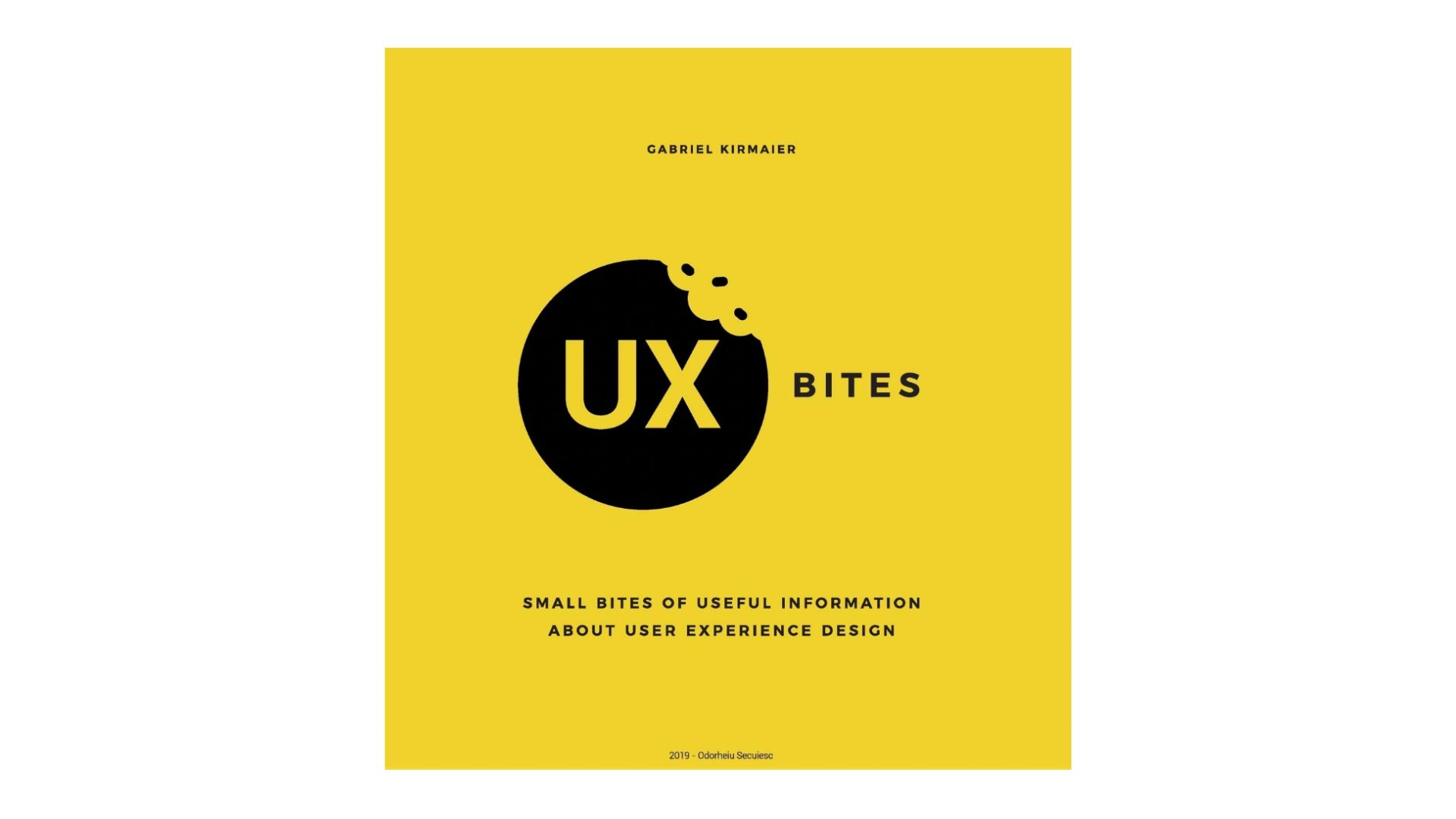
Kirmaier’s book, UX Bites, should be considered a genuine manual for someone who works in the field. Simple and clear, with numerous practical examples, the book offers a complete window on the world of user experience from several points of view: the foundations of user experience in a format that is quick to learn and easy to digest.
This is the only book that defines all the areas of user experience design in a highly visual way. From design to research methods, in this text you can find everything you need to improve the different aspects of your profession.
The main definitions of user experience design and user experience research, the main methods of design applied to digital products, ways of understanding the people who use them, practical suggestions and tricks for improving the user experience, and also the lesser-known sides of how the experience is managed.
Buy the book UX Bites — Gabriel Kirmaier
Conclusions
The points that emerge from the different texts show, with increasing clarity, how much the work of a user experience designer cuts across different sectors and, above all, how much the training of this professional figure needs to have a wide reach, given the subjects that this kind of work raises. The concepts expressed by the books, in terms of principles of usability and of design, go together with further knowledge, such as psychology and the ability to design for people, which are also imperative for any user experience designer.
At Conflux we are always interested in meeting talent who want to grow in the field of user experience. Keep following us, and do not miss our exclusive content on user experience on our social channels. (LinkedIn, Facebook, Instagram, X)
We also recommend