User experience and organic visibility



How the synergy between the design of the user experience and optimisation for search engines can act positively for the success of a website.
While search engine optimisation (SEO) focuses on visibility and ranking in search engines, user experience (UX) design concentrates on what the person experiences while browsing the site.
But how can these two areas cooperate to obtain better results?
In this article, we will explore how the design of the user experience can improve organic SEO visibility, and how user experience designers and SEO specialists can work in synergy for the best result.
What is search engine optimisation?
SEO (search engine optimisation) is a set of strategies and practices aimed at reaching a greater visibility of a website in the results pages (SERP, Search Engine Results Pages) of a search engine.
This kind of visibility is defined as organic or pure, because the position of a site in the search engine’s ranking is not paid for, but is based exclusively on the algorithms of the search engine itself.
Although there are many search engines, the most used in the world is Google, which is why many of the SEO strategies put in place are based on its algorithms and the criteria that govern them, even if they are not entirely public and are continually being updated.
Among all the parameters, the most binding and priority one for ranking concerns people’s search intent: that is, the ability of a web page to respond to people’s needs and satisfy their need to find useful information online.
To improve organic visibility it is therefore necessary to study a careful SEO strategy for the site, which makes it possible to optimise it for search engines, responding as far as possible to the qualitative and technical criteria required by the algorithms.
In a good SEO strategy, one works both on the content of the pages, for example on keywords and on the architecture of the site; and on more technical aspects that affect the loading time of the page, or the accessibility of the site to crawlers (technical SEO).
Improving organic ranking will increase the visibility of our page to people, and consequently increase quality organic traffic, and with this generate the benefit of more conversions, and therefore revenue.
How to improve SEO with user experience
The synergy between user experience and SEO is fundamental to improving the ranking of a website. As we have seen, SEO concentrates on the technical optimisation of the site, such as the use of keywords, the structure of URLs and the loading speed of the pages. On the other hand, user experience concentrates on the person’s experience, including aspects such as the fluidity of the browsing experience, the clarity of the content and the usability of the site.
When the user experience is well designed, visitors spend more time on the site, browse among the pages and interact with the content. These positive behaviours can contribute to usability and therefore to the popularity of the content, generating sharing on social media or other kinds of sharing (backlinks).
So, improving the user experience can lead to an increase in the organic visibility of the site, generating more traffic and raising the conversion rate.
Design optimised for mobile and voice search
The use of mobile devices, such as smartphones and wearables, and voice search are becoming more and more common. Search engines are adapting their algorithms to meet the needs of the people who use them to carry out their online searches. So, refining the user experience for voice search and for mobile has become a factor not to be underestimated.
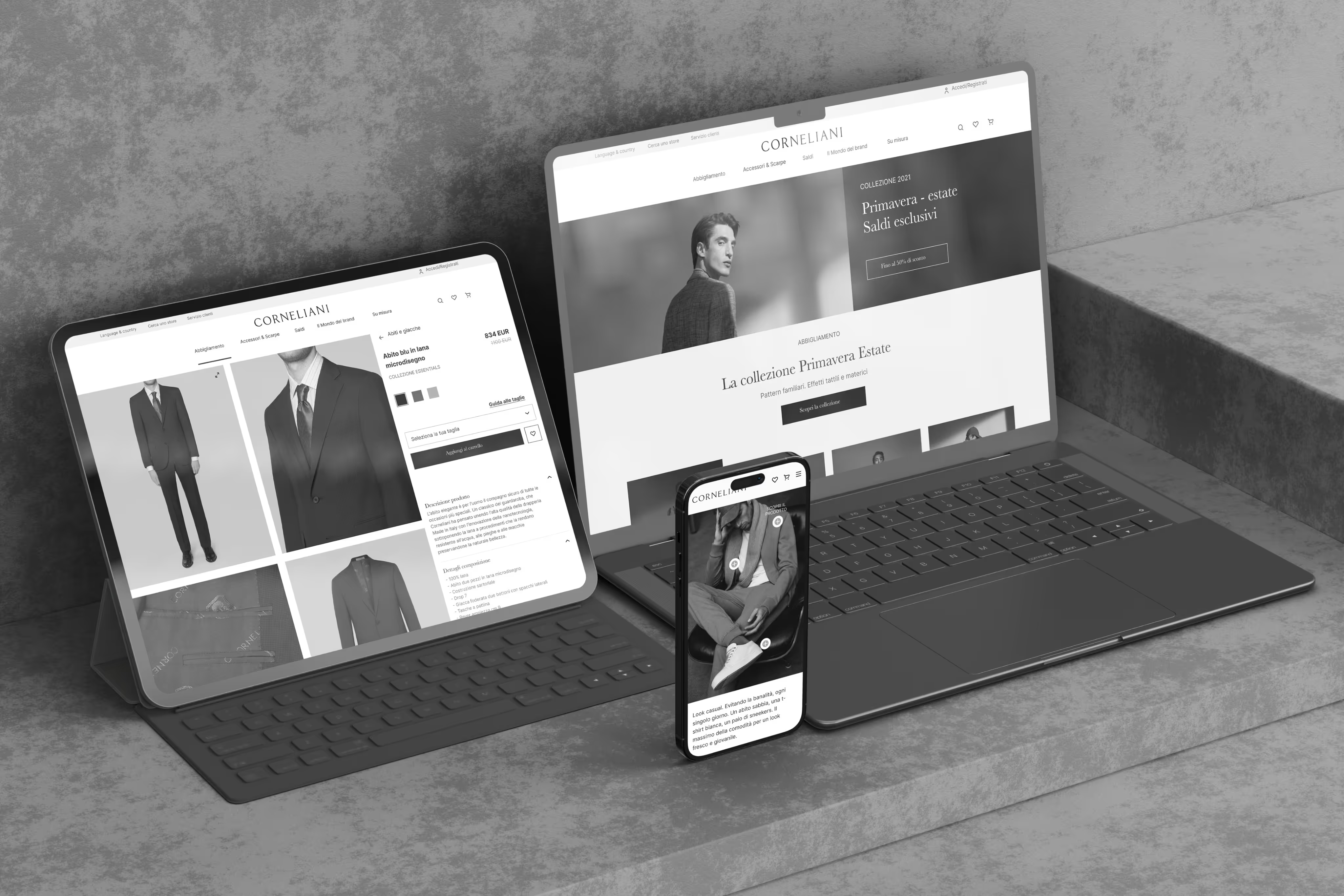
To optimise the site for mobile devices, and therefore make it mobile-friendly, we will need to make sure that the pages are fast to load, simple to navigate and guarantee the same quality of experience also on smaller screens, making the design responsive, that is, adaptable to screens of various formats.
Meanwhile, to improve the user experience for voice search, it will be necessary to provide concise and direct answers to the questions people might ask; in addition, by working on the voice user interface (VUI), we will also improve the level of accessibility of the site.
Simplifying the navigation of the site
A good user experience can make it easier to find and browse content, allowing people to find easily the information that interests them.
To obtain this, work is done on information architecture, on usability, on the content and on the texts that guide the person through the experience, starting from information about the intended audience of the site.
The key is to provide useful and informative content, which answers people’s questions and meets their needs, together with intuitive navigation, which allows people to find easily the information that interests them, thus improving their experience on the site.
Knowing the people who use the site
The design of the user experience is a continuous and iterative process, which requires constant testing and optimisation. It is important to monitor metrics such as page loading speed, visual stability and the number of conversions in order to identify any problems and implement the necessary changes.
Through people’s feedback and the analysis of data, one can better understand their needs and continually improve the experience on the site.
What influences the user experience?
The user experience design of a website deals with the different factors that influence the ways and the quality of people’s interaction with the site itself. We will now look at how these factors, through the user experience, also act on SEO ranking.
Usability of the site
The usability of a website refers to the ease with which people can use a site to reach their goals in a simple, effective, efficient and satisfactory way.
An intuitive interface with fluid navigation favours a positive experience, allowing people to find easily what they are looking for and to carry out the desired actions.
Accessibility
It is important that the site is designed so as to be usable by anyone, including people with disabilities or physical limitations. Designing for accessibility means implementing practices that allow comfortable navigation, such as the correct use of tags for screen readers, the possibility of enlarging the text and, in general, respect for the guidelines for web accessibility.
User interface design
Visual design or the user interface (UI) plays a fundamental role in the creation of an engaging experience. Coherent graphics, combined with a well-organised arrangement of the content, allow people to orient themselves easily and to perceive the site as reliable and professional.
In addition, good readability of the texts, with an appropriate font and adequate sizes, improves the reading experience considerably and makes it easier to understand the information.
Page loading speed
As reported in a Google article dedicated to site speed, when a site responds slowly to the person’s requests or the loading time of the page content is too high, visitors spend less time on that site.
People now expect pages to load quickly and to be responsive. Long waiting times can make people feel frustrated, generate a negative experience and push them to abandon the site.
Meanwhile, fluid and fast transitions between pages and the absence of errors or unexpected interruptions contribute to smooth navigation, improving the experience for the person and, consequently, also the number of pages they will visit and the time spent on the site.
The speed of a site significantly affects the user experience, as well as SEO ranking and the conversion rate of the page, that is, its ability to generate interactions with people that lead to a conversion.
User experience for a successful website
With the exponential increase in websites and applications, people expect to be able to browse in a comfortable and intuitive way, obtaining immediate answers to their needs. A positive user experience not only favours the satisfaction of those who interact with a page, but also has a significant impact on the results of a website.
So, what should one do from a user experience point of view in order to have a successful website?
- Carry out user experience research: it is essential to conduct research with people, analyse the data and test the user experience, in an iterative process. Through research activity one can better understand people’s needs, behaviours and preferences, making it possible to optimise the site on the basis of that information.
In addition, data analysis can provide valuable indications of areas for improvement and of the effectiveness of the changes made.
- Improve usability: a positive experience can lead to an increase in the time people spend on the site, and can help reduce the abandonment rate, because people are more inclined to stay on the site. In addition, a satisfactory user experience can encourage people to share the site’s content on other online channels, thus increasing the visibility and the authority of the site itself.
- Simplify navigation: people should find easily the information they need and browse the site in an intuitive way. If navigation is complex, people will not stay long on the site.
- Optimise images and multimedia content: the right content improves the quality of people’s experience on the site, but it must be optimised so as not to become a negative factor instead. Reducing page loading times guarantees more fluid navigation.
- Personalisation of content: the experience can be more relevant and engaging if the content is personalised on the basis of people’s preferences and behaviours.
In short
Good user experience design not only improves people’s experience, but can also have a positive influence on the organic ranking of a website.
- Conducting research with people, analysing the data and testing the experience are fundamental practices for optimising the site.
- Improving usability and people’s satisfaction can lead to advantages such as an increase in time spent on the site, a reduction in the abandonment rate and an increase in the sharing of content.
Implementing best practices such as simplifying navigation, optimising images and personalising content will contribute to providing a successful user experience.
We also recommend