UX vs CRO: What’s the Difference?



In this post we’ll help decipher the difference between CRO and UX. Spoiler alert: it’s the combination of these two sides of the same coin that helps achieve business goals more efficiently.
CRO and UX are acronyms that have become inseparable when talking about the evolution of digital businesses and online platforms. They’re really two very different methods but, beyond just being complimentary, they’re also rooted in the same interplay of analysis and feedback to achieve a set goal.
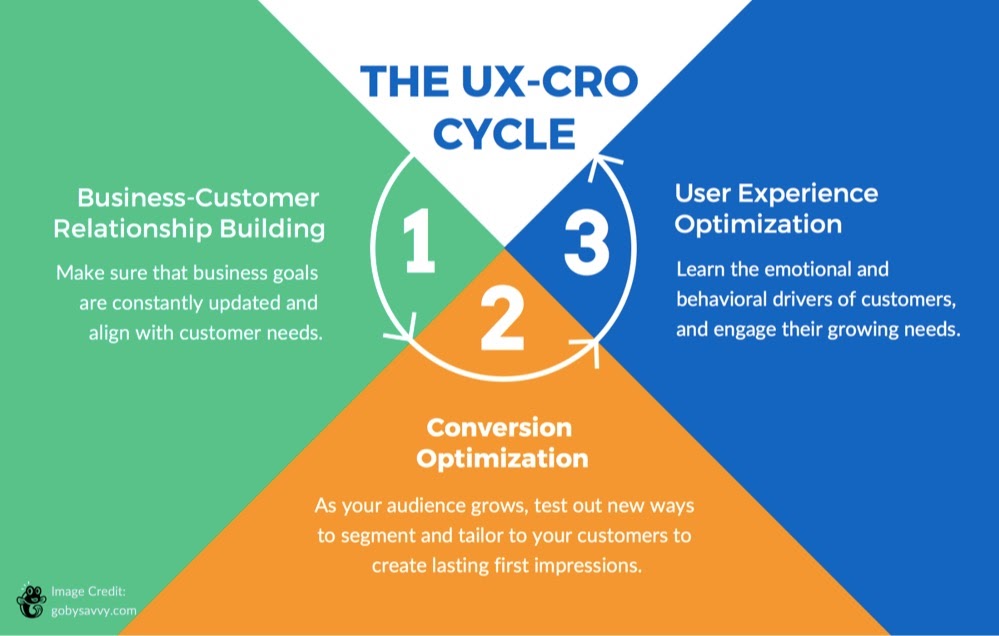
CRO and UX are part and parcel of the same process and it’s the combination of the two that can lead to more efficiently meeting business goals.
Definitions
Both activities require such wide and varied skill sets that defining them can be quite challenging:
- CRO stands for Conversion Rate Optimization, in plain English it’s the ability to cause customers to act according to an ideal established pathway within your website or app. This method aims to improve the ability of the customer to achieve your specified targets, thereby converting more visitors into actual customers.
- UX refers to everything related to the experience of a person (user) while using an asset or service. In other words, user experience encapsulates the user’s response and perception resulting from current or previous usage of a product, system or service.

“CRO and UX are part and parcel of the same process”
The Difference Between UX and CRO
Although the areas of UX and CRO differ in terms of how they come into play, they eventually arrive at the same endgame. Both utilize experimentation and research to unveil opportunities or inject additional support into projects. UX applies learning principles, perception and cognition to analyze user behavior and the motivation behind their decision process. CRO, on the other hand, combines these psychological phenomena with persuasive marketing strategies to influence user behavior and entice them into making a conversion.
Another difference between the two approaches lies in the timeline. UX designers might conduct tests and surveys in the beginning stages of design, do some initial analysis and hand off work to be finalized by CRO specialists down the line.
While UX designers generally draft wireframes, using test results and survey feedback at a starting point, CRO specialists analyze specific flow of subsequent information, arriving at decisive hypotheses for improving conversion rates.
The concept of user experience is very broad and shows up throughout the process, from the first steps until the actual design of the product. Its goal is to collect information and data on user behavior. Conversion rates, instead, are mainly paired with goal definition. They are just as crucial for decisions on project growth and development as for maintenance activities and iterative improvement.
Under this light, many experts in the field recognize that together with other tools (analytics, copywriting and testing), UX rounds out the package to close in on that golden target for every digital product: conversion rate.
Similarities Between UX and CRO
UX and CRO have a lot in common: they’re both used to create a better user experience, make a website more user friendly and accelerate conversion from users into loyal customers.
CRO and UX have a synergistic relationship, creating the perfect strategic recipe to satisfy and encourage users to interact with your digital product. For example, A/B tests and Eye Tracking studies during a CRO audit can uncover precious insights on user behavior, to be used to improve and refresh the user experience on a digital platform.
Wrap up
UX and CRO both relate to the optimization of the user experience and increasing value for customers and the business.
In essence:
- Whereas CRO communicates what is happening, UX explains why it’s happening
- CRO can only help with an website that’s up and running, UX can design new solutions both for platforms to-be and improve existing ones
- Both are important in the initial stages of a startup, to help convert more customers and guarantee a more intuitive experience
- To get best results a combination of both methods is necessary, along with a data-driven approach, to create a digital product that’s in line with business and user needs
We also recommend