UX Design Agency
We are Conflux, a UX design agency for teams that treat design as evidence, not decoration. We combine peer-reviewed research methods with agentic design to turn complex products into interfaces people understand on the first try.




We are Conflux, a UX design agency for teams that treat design as evidence, not decoration. We combine peer-reviewed research methods with agentic design to turn complex products into interfaces people understand on the first try.


A UX design agency designs the experience a product delivers: how it is researched, structured, designed and validated before and after it ships. Conflux covers the full arc — from the first user interview to the live, measured interface. Four practices, one continuous method.

We conduct the studies that tell you what to build: user interviews, usability testing, behavioral analysis, and accessibility assessments. Every design decision we make is traceable to evidence, not opinion.

We design clear, consistent, and accessible interfaces — from information architecture and interaction design to high-fidelity UI and design systems that your team can maintain over time.

We work end-to-end on digital products: we define the problem, prototype quickly, and release flows that hold up in real-world use. We design for results, not just screens.

We map and redesign the entire journey across all touchpoints — digital and human — so the experience remains consistent wherever the customer encounters your brand.

01.
Agentic design, not AI decoration Agentic design means we build design processes where AI agents do real work — synthesising research, generating and testing interface variants, and surfacing accessibility issues — under the direction of senior designers. The judgement stays human; the throughput and the rigour go up. We design with agents, not around them.
02.
Academic rigour as standard Our research practice draws on the same methods used in human-computer interaction and cognitive science: structured usability protocols, controlled testing, and accessibility evaluation against WCAG. We can tell you why a design works, and show our working. That is the difference between a deliverable and a decision you can defend.
03.
Evidence over aesthetics We do not hand over a pretty file and leave. We hand over interfaces validated with real users, documented so your team can build on them, and measured once they are live. On Wide Group’s broker platforms, for example, eye tracking and task analysis surfaced 31 critical usability issues across 41 analysed heatmaps — problems you fix before launch, not after.
Proof, not promises. A selection of products and experiences we have designed for brands across luxury, fintech, insurance and culture — and, where the work is measured in method depth, the numbers behind it.
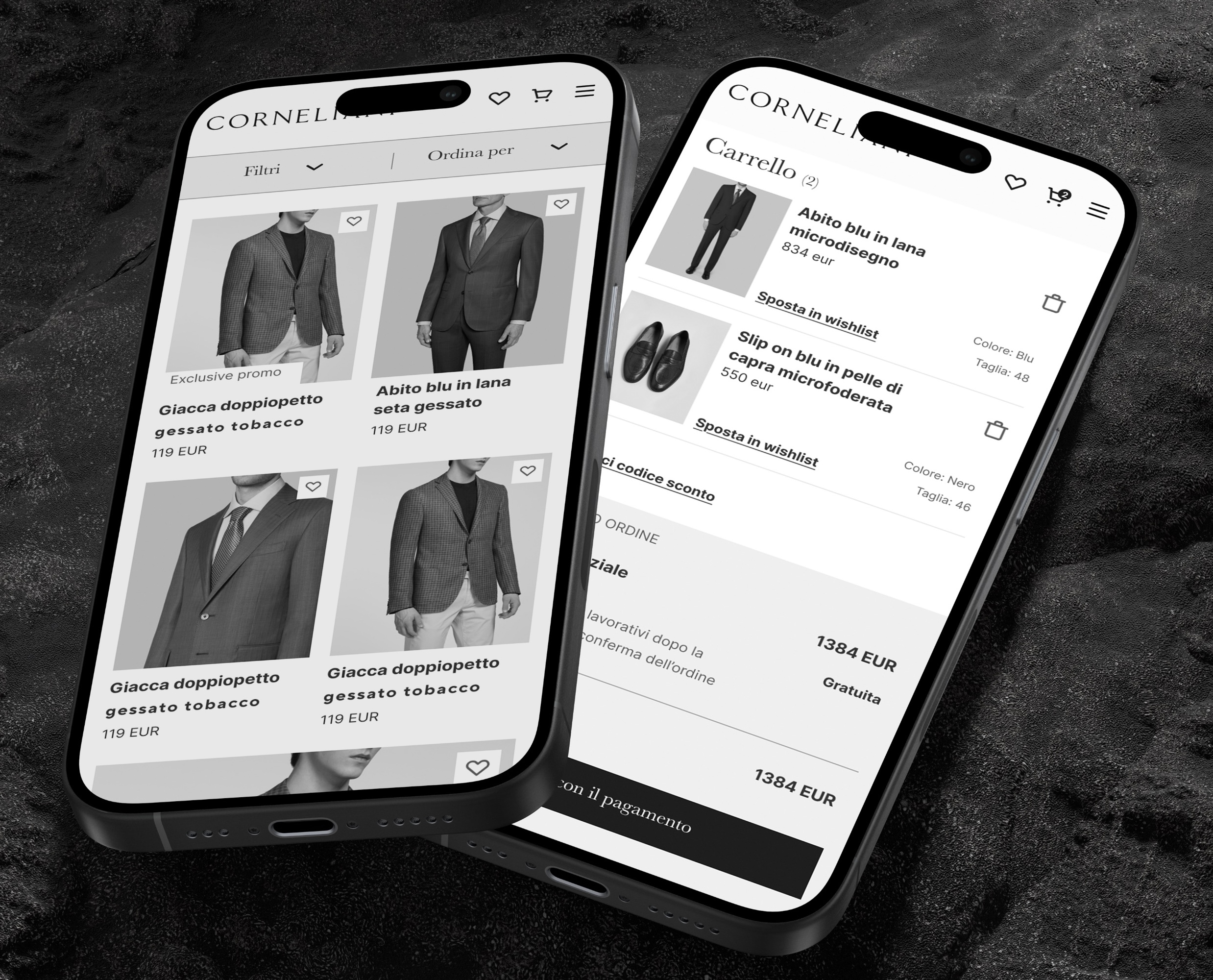
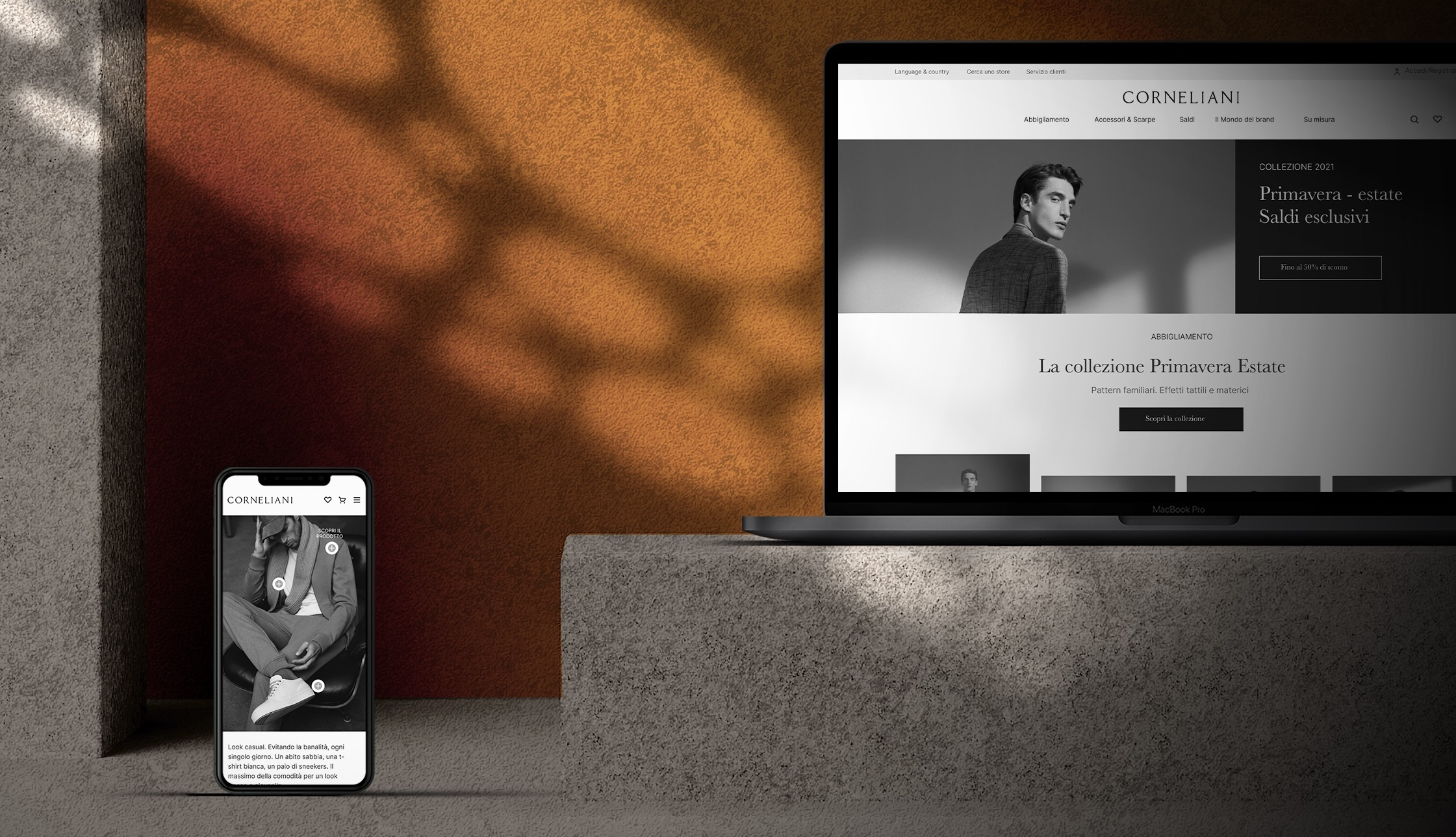
Corneliani
A new UX for a luxury e-commerce experience Sector: Luxury / e-commerce
Challenge: Translate the standards of an internationally recognised luxury menswear house into a digital store that feels as considered as the product.
What we did: Over a three-month, human-centred project we redesigned Corneliani’s e-commerce experience: a mobile-first approach, restructured information architecture and a simplified checkout, delivered through close collaboration across the marketing, development and SEO teams. Link: /en/case-studies/corneliani

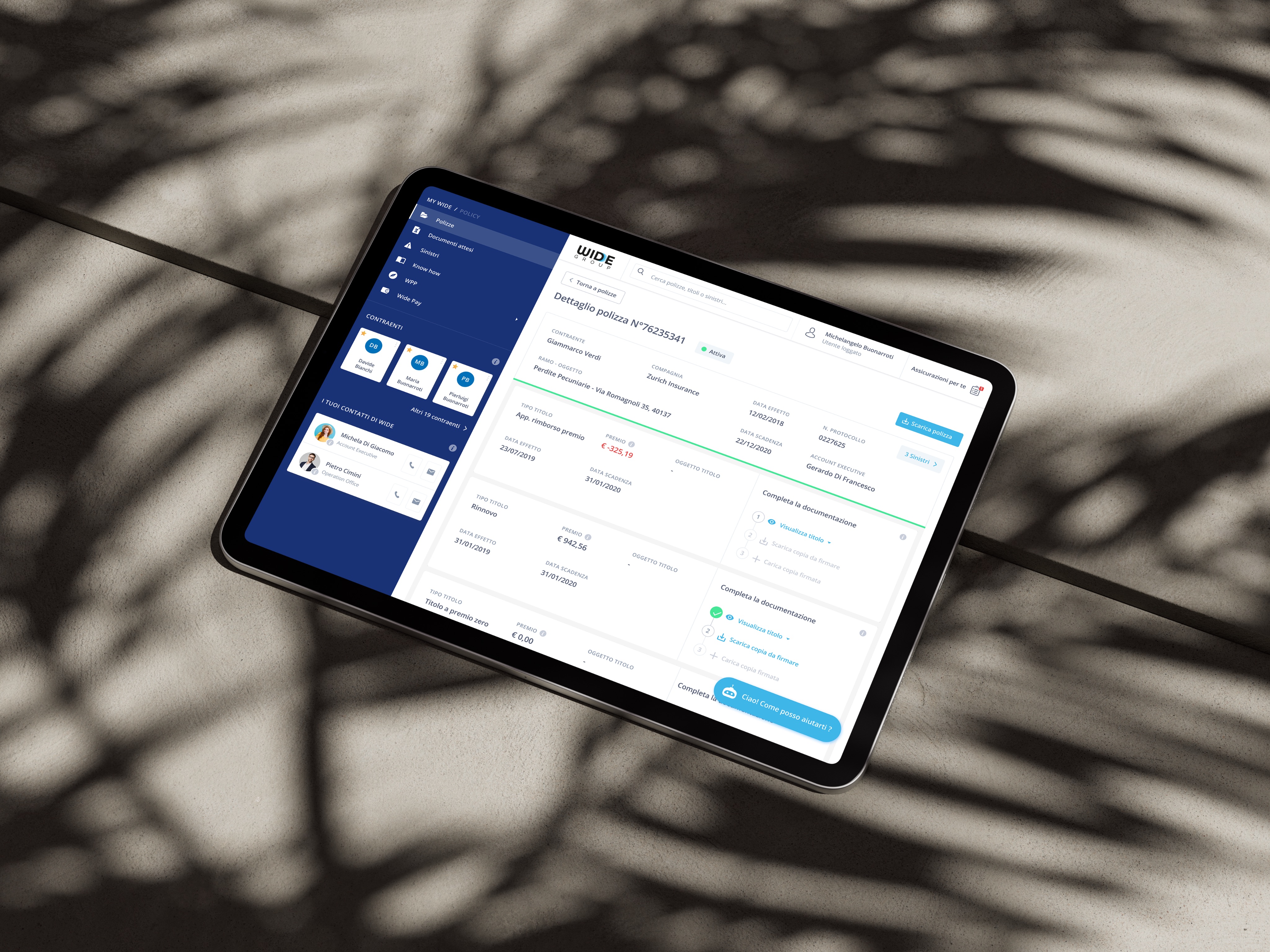
Wide Group
Research-driven UX for insurance brokerage Sector: Insurance / fintech
Challenge: Make complex insurance-brokerage platforms — MyWide and Policy — clear and usable for the brokers who rely on them daily.
What we did: We ran a research-driven redesign built on eye tracking and task analysis. Across the engagement we conducted 8 usability tests with 7 interview participants, analysed 41 heatmaps, mapped 4 customer journeys and surfaced 31 critical usability issues — turning evidence into a redesign brokers can move through with confidence.
Proof (method depth): 8 usability tests · 7 interview participants · 41 heatmaps analysed · 4 customer journeys mapped · 31 critical usability issues identified Link: /en/case-studies/wide-group
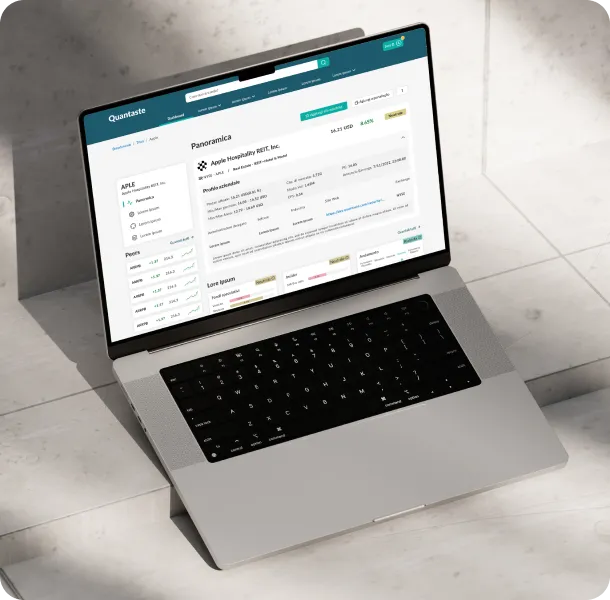
Quantaste
A data-analysis platform for traders Sector: Fintech
Challenge: Turn dense trading and market-education content into a platform traders can read and act on — and one the team can scale.
What we did: We designed a scalable design system for Quantaste (founded by Marco Casario), including a full UI Kit, 5 flexible templates and 2 mapped customer journeys — structuring complex information so signal rises above noise and the product can grow without redesign.
Proof (method depth): scalable design system · full UI Kit · 5 flexible templates · 2 customer journeys mapped Link: /en/case-studies/quantaste
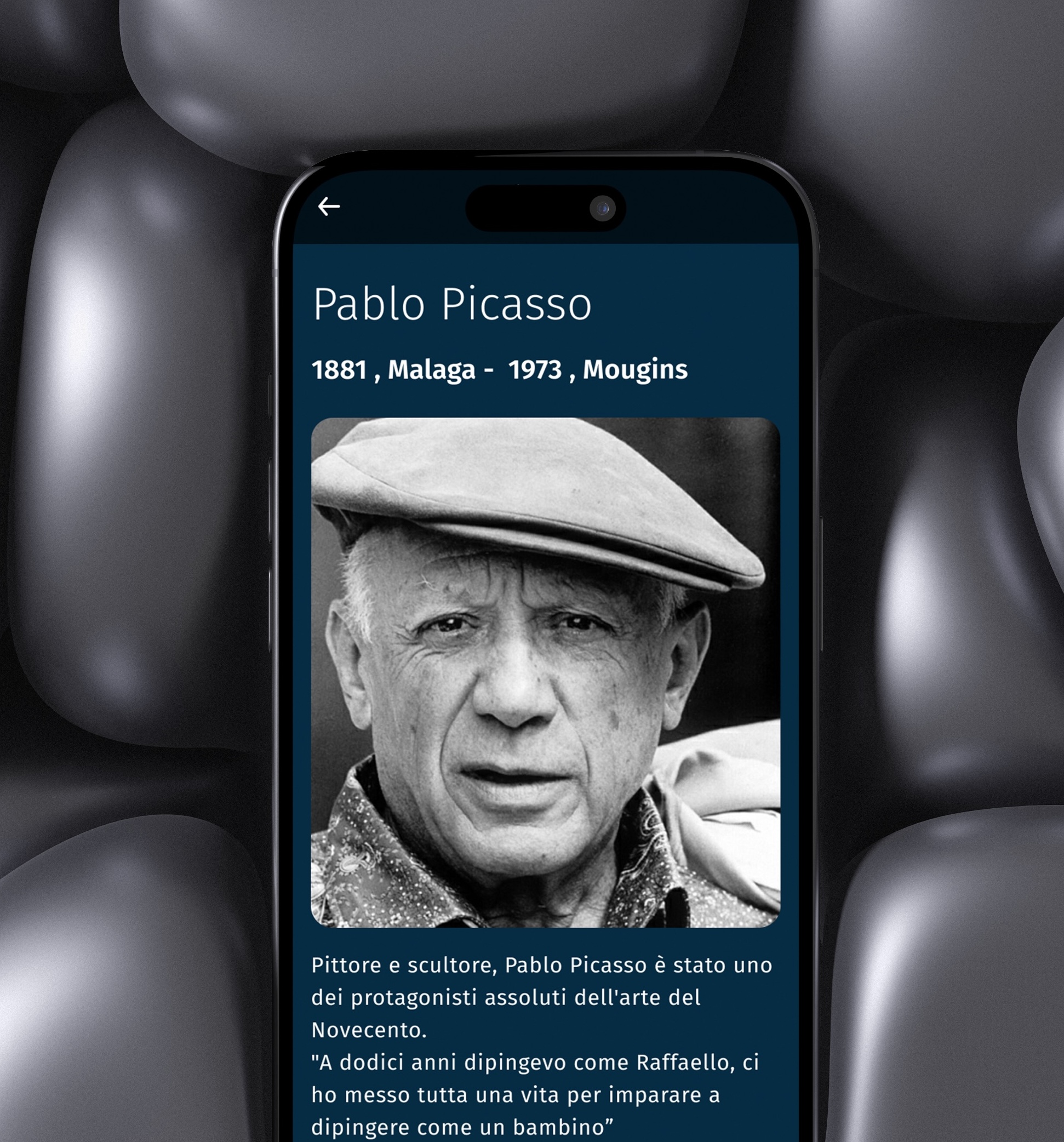
Artsupp
A redesign for culture and edtech Sector: Edtech / culture
Challenge: Refresh a cultural-aggregator platform and bring a new product — the Artsupp Card — to life with a coherent experience.
What we did: We worked from a stakeholder workshop through expert review and competitive benchmarking to a high-fidelity prototype, validated iteratively — redesigning the Artsupp site and shaping the UX of the Artsupp Card so discovery, content and membership connect into one journey.
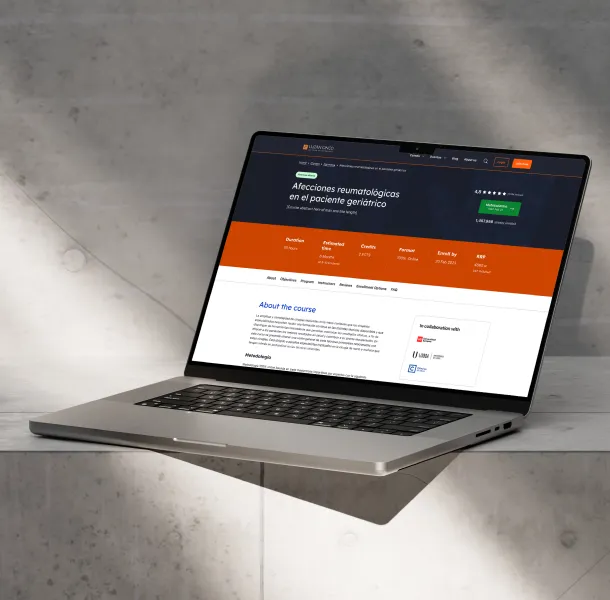
Luzán 5
UX for a healthcare e-learning platform Sector: Healthcare / education
Challenge: Improve a specialist healthcare e-learning platform (thinkohealth) serving Spanish and Latin American markets.
What we did: Through heuristic and expert analysis we identified 48 critical issues, then translated them into 13 strategic recommendations and 17 prioritised redesign actions — giving the team a clear, evidence-led path to a better learning experience.
Proof (method depth): heuristic / expert analysis · 48 critical issues identified · 13 strategic recommendations · 17 prioritised redesign actions Link: /en/case-studies/luzan
We do our best work with teams shipping products where clarity matters and the stakes are real. If that is you, we should talk.
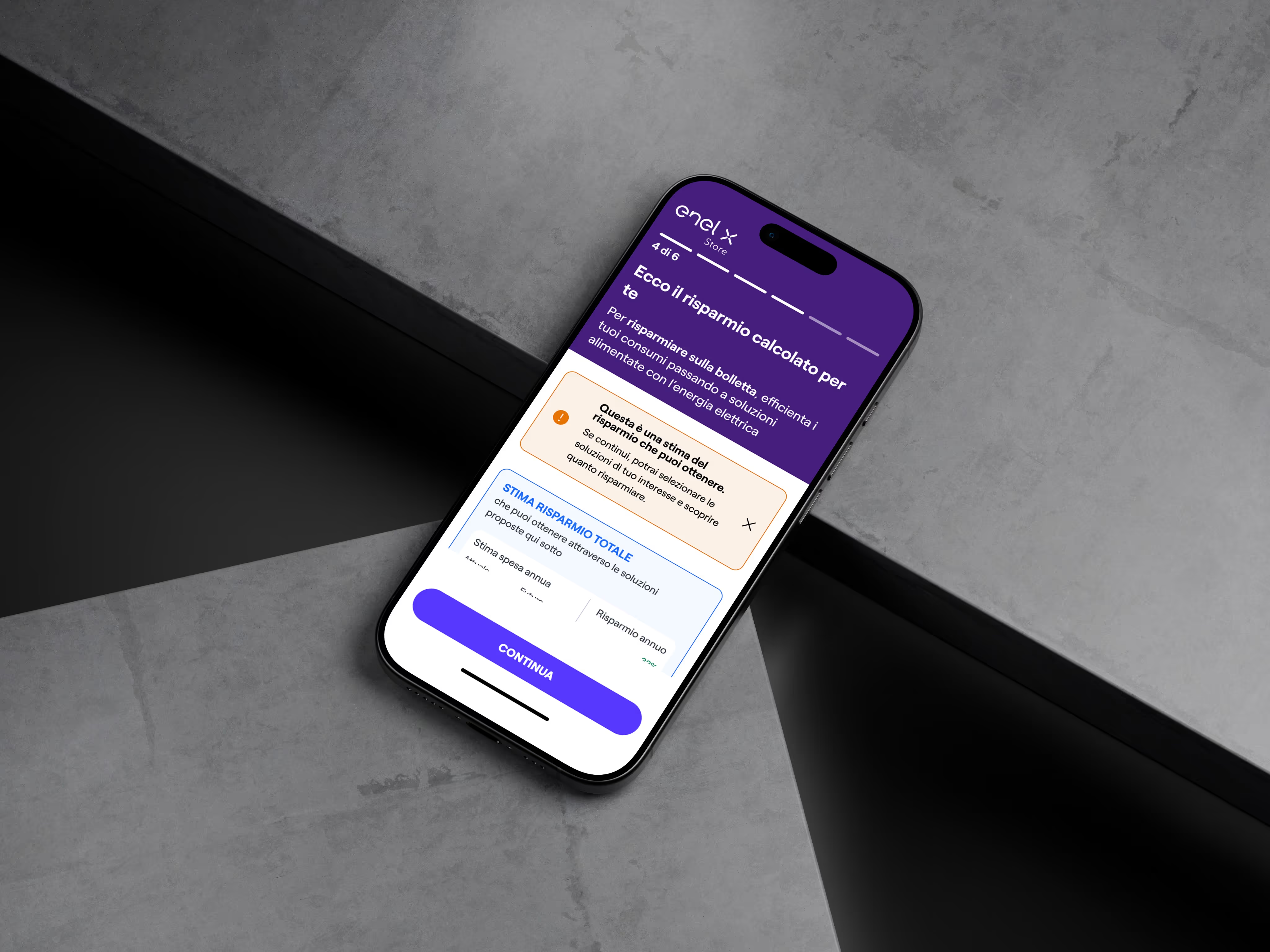
Sectors we know: luxury e-commerce and retail · banking, insurance and fintech · energy and utilities · travel, mobility and hospitality · public administration · edtech and culture · healthcare and training.
travel, mobility and hospitality · public administration · edtech and culture · healthcare and training.
What you get: interfaces your users understand without needing a manual. Research you can defend in a boardroom. Accessible products that are WCAG and EAA compliant. A design partner that measures outcomes, not just deliverables.
What you get Interfaces your users understand without a manual. Research you can defend in a board meeting. Accessible products that meet WCAG and the EAA. A design partner who measures the result, not just the deliverable.
A UX design agency designs the experience a digital product delivers — how it is researched, structured, designed and validated. In practice that means user research, UX/UI design, product design and service design, all aimed at making a product easier and more effective to use. At Conflux, every recommendation is traceable to evidence from real users, not opinion.
UX design is usually priced in one of three ways: a fixed-scope project (for a defined deliverable such as a usability audit or a redesign), a monthly retainer (for ongoing design partnership), or a time-and-materials engagement (for evolving work). The right model depends on the size of the product, the depth of research required and how much you need delivered. Conflux scopes each engagement to the decision you are trying to make — book a discovery call and we will give you a clear, itemised estimate rather than a generic rate card.
An in-house designer is best for continuous, day-to-day product work once your direction is set. A UX design agency is best when you need senior research and design capacity quickly, an outside perspective, or a specific outcome — a redesign, an accessibility audit, a new product — without growing permanent headcount. Many teams use both: an agency to set the research-led foundation and a system, then in-house designers to maintain it. Conflux is built to do the first, and to hand over work your in-house team can own.
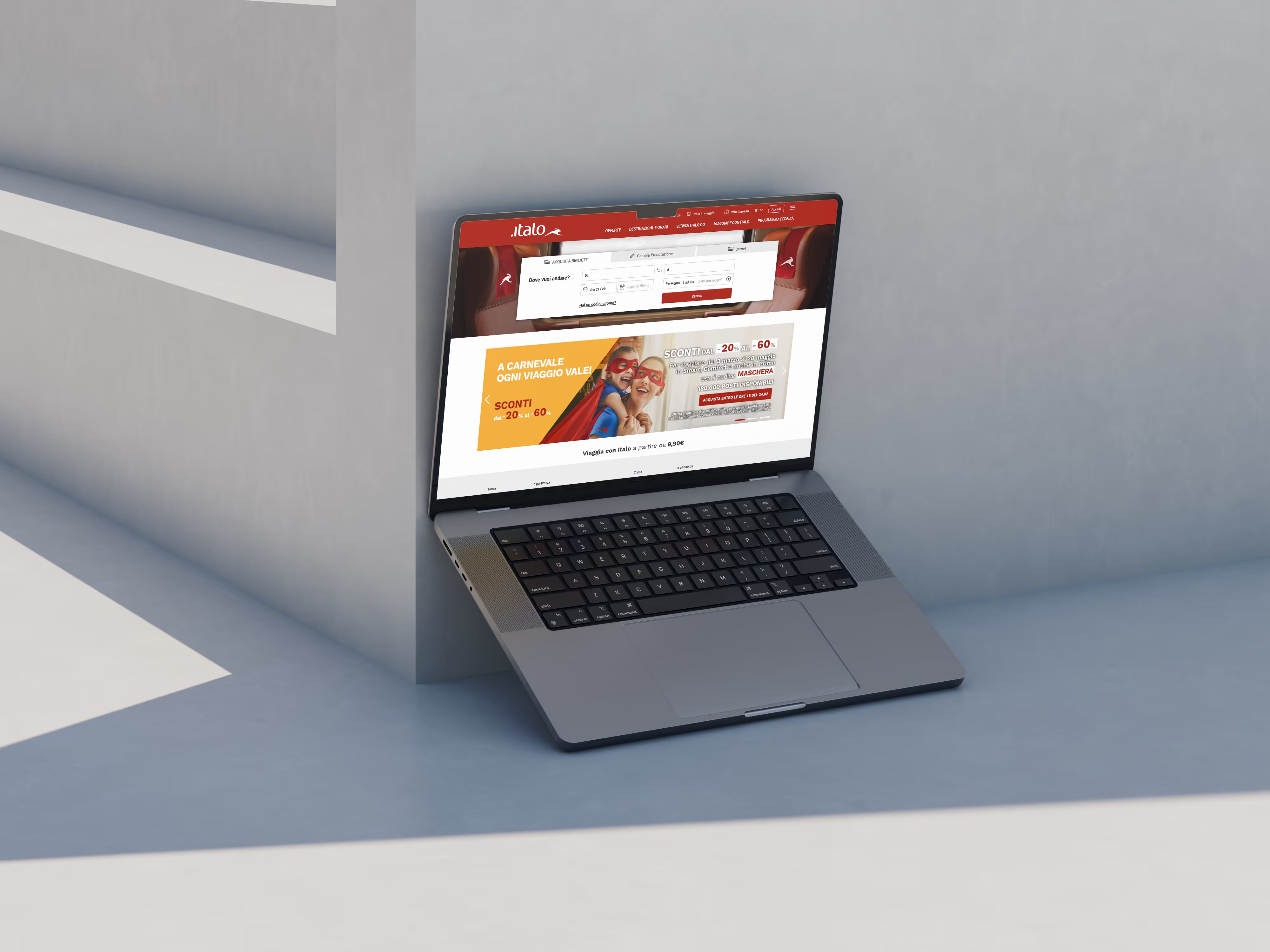
Conflux works across luxury and retail e-commerce, banking, insurance and fintech, energy and utilities, travel and hospitality, public administration, edtech and culture, and healthcare and training. Recent work includes Corneliani (luxury e-commerce), Wide Group (insurance), Quantaste (fintech) and Artsupp (culture). We are most effective on products where complexity is high and clarity is critical.